Overcoming Breastfeeding Barriers
August is National Breastfeeding Month and World Breastfeeding Week is August 1–7, making August the perfect time to promote and support breastfeeding as the best way to nourish most babies.
An important part of promoting breastfeeding is identifying common barriers to breastfeeding and ways to overcome these barriers to ensure as many babies and families as possible experience the many benefits breastfeeding provides.
At Childbirth Graphics, we have a dedicated line of
breastfeeding and lactation education materials that are perfect for breastfeeding educators to use as they work with expectant and new parents to overcome breastfeeding barriers and achieve breastfeeding success. We also provide essential reference materials for healthcare students to use as they train to become lactation consultants.
Read on to learn about several common breastfeeding barriers, strategies to help overcome those barriers, and our engaging
breastfeeding education materials and models that are ideal teaching tools for educators to use to help their clients achieve breastfeeding success.
Limited Knowledge of Why and How to Breastfeed
Although most expectant and new parents are aware that breastfeeding is recommended as the healthiest way to feed their babies, they may not know how breastfeeding benefits babies and their mothers. Or, they may mistakenly believe that today’s infant formulas have the same health benefits as breastmilk. As a result, they may be less committed to initiating and maintaining breastfeeding.
With a focus on lactation education, Childbirth Graphics has many breastfeeding education materials focusing on breastfeeding benefits for both babies and their mothers, including easy-to-read, easy-to-understand handouts that educators can provide their clients or patients.
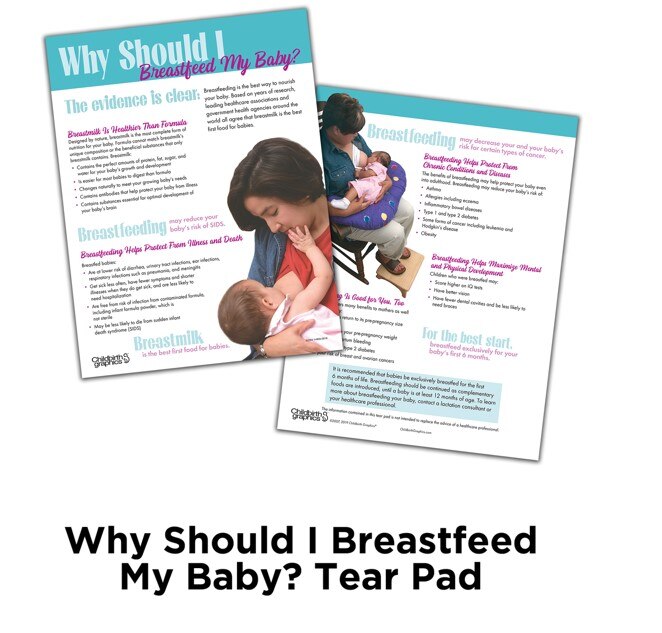
For example, our two-sided, 100-sheet
Why Should I Breastfeed My Baby? Tear Pad provides information about the many health benefits of breastfeeding for babies and their mothers. The tear pad explains that breastfeeding helps protect babies from multiple illnesses and death when compared with formula, decreases their risk of chronic conditions and diseases (including some types of cancer), and helps maximize their physical and mental development. The tear pad also explains that mothers who breastfeed reduce their risk of breast and ovarian cancer as well as type 2 diabetes.
Family support makes a big difference in a mother’s commitment to breastfeeding. Fathers often play a substantial role in whether their babies are breastfed. The more a father understands the many health benefits breastmilk and breastfeeding provide, the more likely he is to support his partner’s commitment to breastfeeding. Our 100-sheet, English/Spanish
How Fathers Can Support Breastfeeding Tear Pad is an ideal handout helping fathers understand why breastfeeding is best for babies and what they can do to support breastfeeding. Our
New Dads Activity Kit also highlights the key part a father can play to support breastfeeding and take an active role as a new parent.
The stronger the support team for a breastfeeding mom, the better! Our
Breastfeeding Chart Collection features 35 full-color charts covering a wide selection of breastfeeding issues and includes tips for fathers, grandparents, other relatives, friends, and siblings to support the breastfeeding mom’s commitment to breastfeeding.
Difficulty Dealing With Breastfeeding Challenges
Many first-time mothers may plan to breastfeed, expecting this process so often described as “natural” to be relatively easy and straightforward. Even though breastfeeding is a natural process, it is still a learning process for both a mother and her newborn. Without the proper support, new parents may decide not to continue breastfeeding when early challenges arise.
Education is key in getting breastfeeding off to the right start, helping ensure new parents can stay committed to breastfeeding. Childbirth Graphics has a full selection of breastfeeding essentials educators can use to help new mothers learn about breastfeeding basics (such as positioning, achieving a correct latch, and knowing whether a baby is getting enough breastmilk) as well as how to deal successfully and prevent issues such as engorgement, sore nipples, and mastitis.
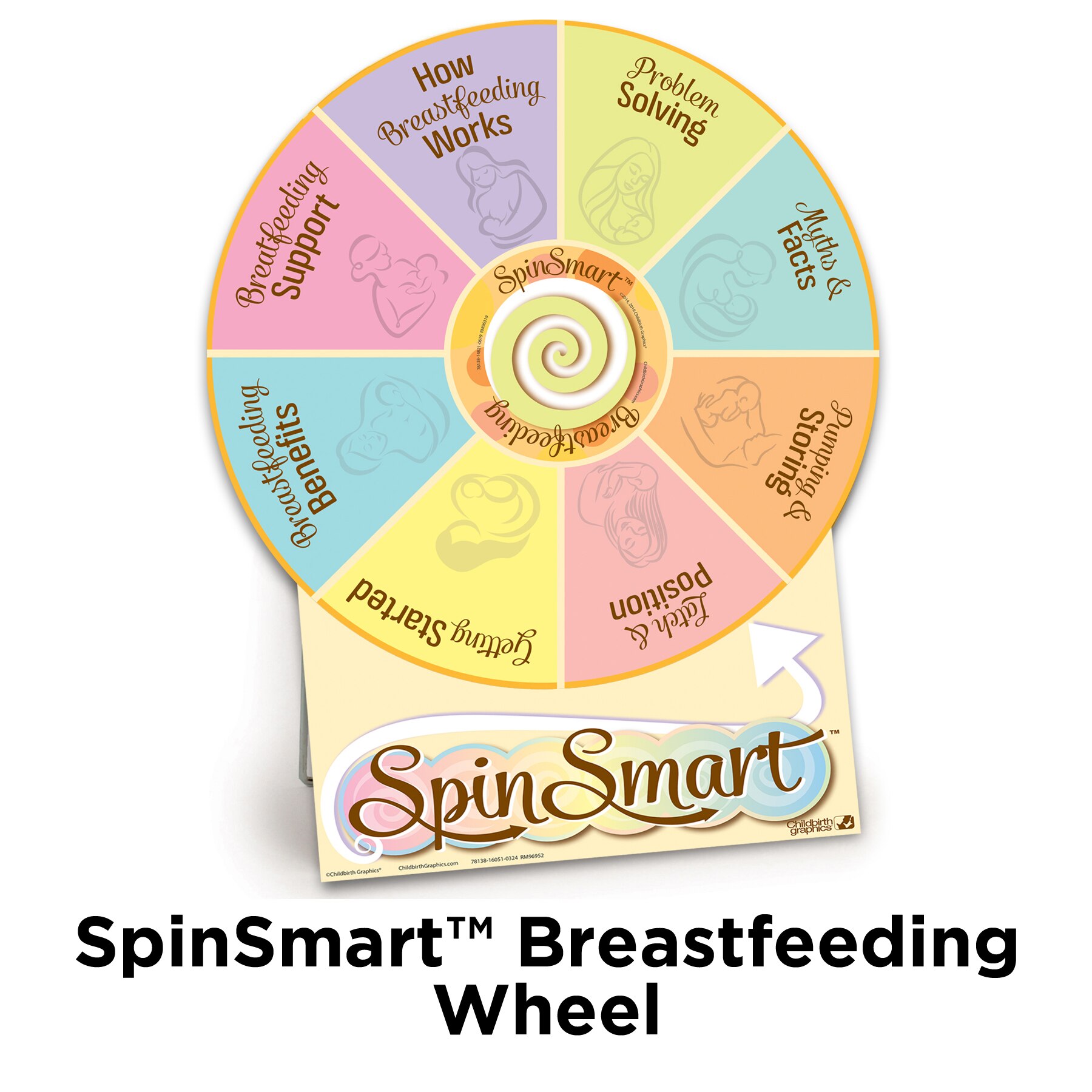
For example, our popular
SpinSmart Breastfeeding Wheel is a fun educational activity that covers a comprehensive variety of breastfeeding concepts with a spinning wheel and multiple-choice format. The wheel features 80 questions covering everything about breastfeeding, from getting started to positioning and latching on, pumping and storing, and problem solving.
Problems When Returning to Work
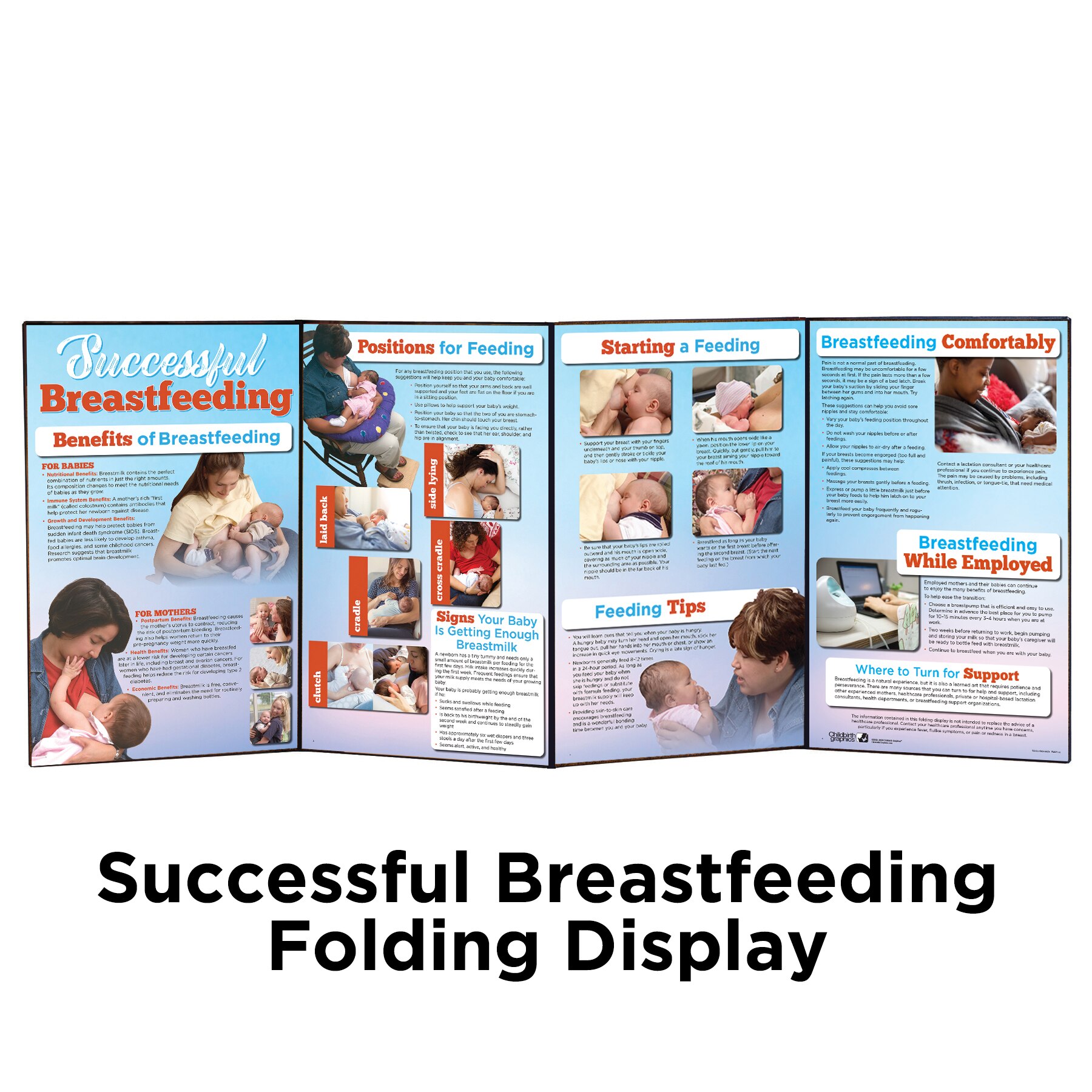
Staying committed to breastfeeding can be challenging when a mother returns to the workplace. Our
Successful Breastfeeding Folding Display offers tips to help mothers prepare to return to their places of employment, such as choosing an efficient breastpump and starting to pump and store breastmilk two weeks before returning to work.
Employers can reap great benefits by enhancing their support of breastfeeding employees. Breastfed babies tend to be healthier than formula-fed babies, reducing healthcare costs. Parents of breastfed babies need less time off work to care for a sick baby. By supporting and encouraging their breastfeeding employees, employers can enjoy greater employee job satisfaction, decreased employee absenteeism, better productivity, less employee turnover, and a higher public perception of the company—all while playing an invaluable role in building a healthier community!
Steps employers can take to support breastfeeding employees include creating a company lactation policy, providing a designated space for breastfeeding employees to express breastmilk, extending parental leave, providing flexible scheduling or work-from-home options, offering on-site child care, and providing lactation support information and services.
Find More Engaging Breastfeeding Education Materials
Even though August is National Breastfeeding Month, every day is a great day to promote the importance of breastfeeding! Childbirth Graphics is here to help you help expectant and new parents achieve breastfeeding success for their growing families. Check out our
breastfeeding and lactation teaching materials to find all your educator essentials.
The information contained in this newsletter article is not intended to replace the advice of a healthcare professional.
©2025 Childbirth Graphics®